Wednesday, 27 December 2006

Christmas treats for the birds

It is very mild here at the moment, very uncharacteristic for Scotland at Christmas! We have even missed some of the hard frosts here. As such the birds can be seen digging in the soil for food below my feeding stations – the blackbirds are the most noticeable in this. My daughters, aware of my increasing interest in the visiting birds, gave me Christmas parcels with a bird theme this year.

The picture above was taken today - in the middle of the afternoon. It shows a dull but relatively mild day. I took this picture to show the tree on the left – planted on Christmas day. It is a Cotoneaster Hybridus Pendulus– and was a Christmas parcel from my husband.

We thought it would give a bit more height and year round interest to this area - red berries in the winter and white blossom in spring. The birds very quickly have discovered it and use the post to look about and the branches as a stop over to the feeders or the ground. I’m sure they will be tempted by the berries when the snow and really cold snaps hit!

My youngest daughter gave me a new, small, feeding house and meal worms (frozen) which I filled it with – I have hung this tucked away on my arch beside my young pine tree where any falling food will rest and the birds can eat from there too. She also gave me a pack of fat balls and a small basket-woven roosting pocket (like the other two I already have). I hung the roosting pocket near the others and the fat balls from tree branches. My eldest daughter gave me a tiny niger (thistle) feeder, with a really tiny hole for the seeds to get out – I suspect this hole may increase as they feed from it! I hung this from a branch on my pine tree and I will watch with interest to see the goldfinches get any seed out.

A variety of birds have been visiting my garden over the last few days:

  • Blackbirds, chasing each other still – but really enjoying the sultanas I have thrown out for them. I scatter them out into the borders some days and they generally see me doing this and are quick to find them.
  • Robins, dunnocks and house sparrows have been visiting but I have noticed the robins more with fewer numbers of house sparrows – I suspect the house sparrows haven’t liked the change in my seed mix! I changed the mix to a no mess one that will reduce the weeds below the feeding stations. I haven’t fed the birds bread in a while so maybe that has had an effect too.
  • Goldfinches are out numbering the blue tits at the moment. Sunflower hearts are going down well with both at the moment – they are obviously smart knowing there is a higher level of energy in them! The Blue tits were also very quick to find the new fat balls hanging from tree branches – with one really smart one finding the meal worms!
  • Chaffinches are visiting a lot more now and I am noticing a few pairs. They were the first birds I noticed using my new tree as a resting spot – within 10 mins of it being planted. They seem to like the peanuts and the sunflower hearts and are often on the ground below the sunflower heart feeders although seem a bit shyer at the feeders themselves.
  • Starlings are invading the feeders in groups. They do like the fat balls and with their long sharp beaks bring up the balls quite quickly and they fall to the ground. I have noticed they are also a tad partial to the sunflower hearts too and take over the feeding station that has them.
  • The Sparrowhawk had not been spotted in a while although I do not expect it has forgotten where my garden is! Perhaps the absence of large numbers of house sparrows is a factor. I said ‘had not been spotted’ – it has just flown by and perched itself on a neighbours tree and is looking about. No birds were at my feeders so off it went to find its supper elsewhere!!

The pictures above show the first time we were able to identify our visiting bird of prey- the sparrowhawk. They were taken after it stunned itself on my window.

It took a moment to stand up – long enough for me to grab a camera and take a few pics as you will see below. It seemed to hurt its leg and could initially only fly as far as the top of my bird table – shame!!! Needless to say after perching there for a while the birds didn’t come to the feeders for almost two hours.

Tuesday, 5 December 2006

Visiting birds – who is doing what?

On bright sunny mornings I have been catching some good footage, with my video camera, of bird activity in my garden. This footage really shows the character of the birds and their mannerisms. I hope to show some clips soon but for now - what are the birds in my garden up to at the moment?

BLACKBIRDS

  • Females and Males are regularly using my ground bird bath
  • Dried fruit on the ground feeder is going down well – although sultanas and raisins seem to be the favourites.
  • In the early morning I have noticed groups of up to four blackbirds walking quickly in dashes on the ground appearing to follow each other – I expect it is a territory thing but there is often a female in the group!
  • Food on the ground under the feeders is also attracting the blackbirds – although they do seem just as happy to go to the tables.
  • To see a blackbird go to http://www.rspb.org.uk/birds/guide/b/blackbird/gallery.asp

ROBINS & DUNNOCKS

  • Robins and dunnocks are spending a lot of time under the feeders in search of food and mostly go unnoticed. Both are appearing at the tables but the jerky movements of the robin make me notice it before I have seen its little red breast.
  • I have noticed how much the robin’s head bobs up and down as it feeds, tilting to one side it as if to show it is forever on the alert for predators.
  • When I see a bird suddenly drop to the ground, I am still always surprised it is a robin. It just does not look as if it was built for speed drops!
  • Robins are territorial and I definitely notice it chase off the dunnocks or another robin – when the feeders are quiet!
  • To see a robin go to http://www.rspb.org.uk/birds/guide/r/robin/gallery.asp
  • To see a dunnock go to http://www.rspb.org.uk/birds/guide/d/dunnock/gallery.asp

Friday, 1 December 2006

Favourite flowers of 2006

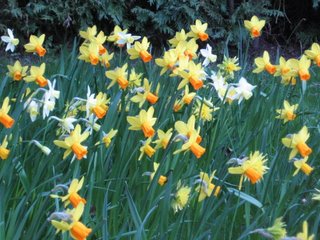
This year we enjoyed a great display of spring bulbs. This was indeed a treat as I am a gardener who is always changing planting schemes, resulting in bulbs being lost! I was about to sow this area with grass when I suddenly had the brainwave of planting bulbs in the area first - so they would grow up through the grass.

I planted a number of species narcisi, crocus and fritillaries and was thrilled to watch their progress. After the bulbs flowered, I deadheaded but left all stalks and leaves. I cut my grass around the display until the end of June, when I cut straight across it. I expect these bulbs will naturalize as they will remain undisturbed, we should then enjoy displays for a many years to come.


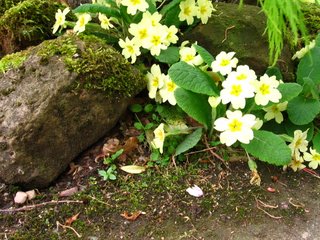
Above, in flower during the month of May, is Scotland's native primrose which I grew from seed two years ago. You can see that it is happy to self seed freely. The leaves almost die away completely but up it comes lush and ready for flower again. I wait until the seedlings are strong enough then lift and transplant them to other areas. I do love our native plants, perhaps because they remind me of my woodland walks as a child, when wild flowers were in abundance. I so enjoy the month of May and early June.

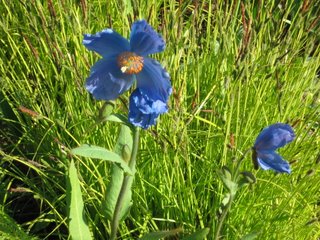
The Queen of my jungle is most definitely the Meconopsis below! They rise above the new growth of my Bowles Golden sedge grass so regally. This plant is another Scottish favourite often found in shady spots in woodland gardens. They are, to me, quite exquisit. My varieties do not set seed, but the upside to that is that I perhaps get stronger plants with good quality flowers.


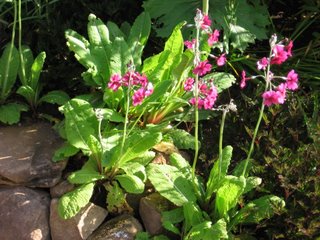
Candelabra primulas, shown above, grow well beside meconopsis. They are also often seen planted along the edges of streams. They thrive in damp and shady conditions but still enjoy some sunshine. They can be propagated by root cuttings and the time is about right now, in December. I plan to try this this soon before the soil gets too cold and hard. I plan to lift one plant, wash away the soil then trim some roots and lay them into a tray of compost. I will then put one tray in my unheated greenhouse and leave another tray outside to see if I can successfully root some. I do enjoy experimenting with cuttings - often having no space to plant all my new plants! I usually give extras away to friends and family - it's the challenge I enjoy.


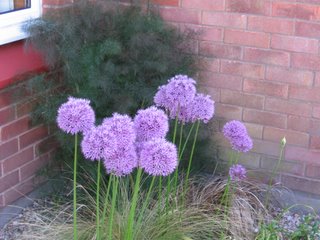
My front garden has little shade and gets baked in the summer sun. I have a mulch of quartz gravel here to keep my plants from drying out, and as this gravel is light in colour, it reflects the heat back a little. So this area is a little bit trickier to move my plants around - but I always get round it! As plants grow and shapes change - I always find something needs a tweak or a revamp. Now that's the fun part - I so enjoy rearraging planting schemes. Some areas are changed after only a few months. I will just go out one day with the intention of a bit of light prunning - and what a difference a couple of hours can make! The shape and form of plants, for me, often come above the flower and its colour. The two pics, above, of the globe of Alliums are a strong favourite of mine - they have both form and colour.

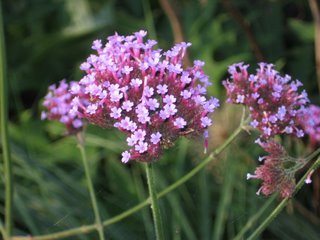
In September long after the purple colour leaves my alliums, leaving only a dry skeleton ball, a new shade of purple and a quite different form replaces it! Next through my copper tinted grasses rise the, now popular, Verbena Bonariensis. These plants are home grown from bought seed - although now in December they too are dry skeltons. I plan to cut and store some stems to collect seeds from them, maybe it is too late. I have already lifted a few of these plants and will overwinter them in my greenhouse to safeguard against any winter losses. I will try and take cuttings from them in the spring once side shoots get bigger. This is a tall plant that can reach 1.5m, becoming more branched as it grows with tiny clusters of tiny purple flowers which 'bob' about in the wind. It is often called the see-through plant. Garden designers love this plant, as do the butterflies and bees.

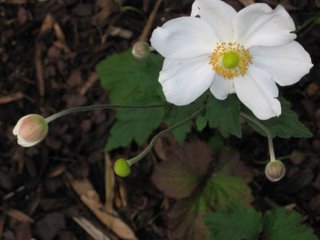
Japanese Anemone, shown below, ends the list for this year. They are such a refreshing flower during September and into October. I am delighted that my propagation methods worked and that I have increased my stock. I have not increased my flower numbers yet, but this will come. The young plants are firstly producing more leaf but some did give a flower. Japanese Anemones do colonise with time but as I didn’t necessarily want large groups where the original plant is, I decided to intervene. So, as I noticed young plants beginning to form at the base of the parent plant I carefully moved the soil back and dug out these new plants. I initially potted them up and kept them in my unheated greenhouse. They were planted out in late spring. I will definitely use this method this year, very soon before the soil gets too hard. I also picked up a dried out, half-dead Anemone Whirlwind last year which was reduced in price at my local garden centre – I managed to successfully produce new plants of that by root cuttings. I have to mention here that I have moved anemones in the past, and tried to divide them, but lost them every time!